


What is the most widely used pallet racking system?
 Apr 30, 2025|
 View:976
In the realm of warehouse storage solutions, pallet racking systems are indispensable for optimizing space, accessibility, and efficiency. Among the various types of pallet racking systems, one stands out as the most widely adopted globally: selective pallet racking. This article explores why selective racking dominates the market, its unique advantages.
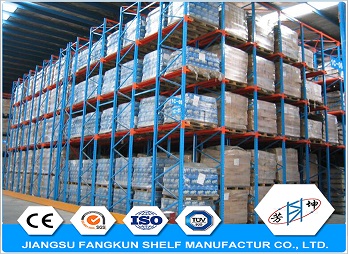
1. Introduction to Pallet Racking Systems
Pallet racking systems are engineered to store goods stacked on standardized pallets, enabling efficient handling by forklifts or automated equipment. They are critical for industries managing bulk inventory, from retail and manufacturing to logistics and cold storage. While several pallet racking designs exist—such as drive-in, push-back, and double-deep racking—selective pallet racking remains the most versatile and widely used solution.
2. What is Selective Pallet Racking?
Selective pallet racking is a storage system designed for direct access to every pallet in the warehouse. Its structure consists of vertical upright frames connected by horizontal beams, creating adjustable storage levels. Key features include:
Open Accessibility: Each pallet is individually accessible, eliminating the need to move other loads to retrieve a specific item.
Adjustability: Beam heights can be reconfigured to accommodate varying pallet sizes.
Compatibility: Works with most forklift types (counterbalance, reach trucks) and suits facilities with high SKU diversity.
This system’s simplicity and flexibility make it a go-to choice for warehouses prioritizing both storage density and operational efficiency.
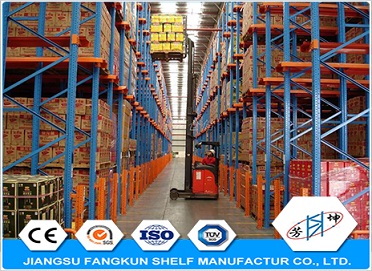
Why choose Selective Pallet Racking ?
Unmatched Accessibility
Unlike high-density systems (e.g., drive-in racks), selective racking ensures every pallet is immediately accessible. This is critical for:
First-In-First-Out (FIFO) inventory management, essential for perishable goods.
Fast order fulfillment, especially in e-commerce and retail distribution.
Flexibility and Scalability
Selective racking adapts to changing business needs:
Adjust beam heights for different product sizes.
Expand storage capacity vertically or horizontally as inventory grows.
Cost-Effectiveness
Lower upfront costs compared to complex systems like automated storage and retrieval systems (AS/RS).
Minimal maintenance and easy installation reduce long-term expenses.
Space Efficiency Without Compromise
While not as dense as drive-in or push-back racks, selective systems strike a balance by utilizing vertical space (up to 40 feet tall) while retaining full accessibility.
Broad Industry Applicability
From automotive parts to pharmaceuticals, selective racking suits nearly every industry. Its universal design makes it ideal for facilities handling diverse product types.
Conclusion
Selective pallet racking remains the most widely used pallet racking system due to its unmatched accessibility, adaptability, and cost-effectiveness. While high-density alternatives have niche applications, selective racking’s ability to balance density, flexibility, and ease of operation ensures its dominance in industries ranging from retail to manufacturing.


Recent News
1.SELECTIVE PALLET RACK are loading for our regular clients
2021-03-302.Additional new Selective Pallet Racking Project Case Finished
2021-11-123.Additional New 2.5tons Selective Racking Project just Finished
2021-06-214.How Stainless Steel Pallet Racking Enhances Warehouse Efficiency
2023-09-205.What are steel pallets used for
2023-11-10

